Tuesday, May 26, 2009

Change has come to The Lord Geekington

As you may have noticed, the banner has undergone something of an art evolution. Since I drew the old banner last year I've taken an art class and wow, what a difference it has made! I would love to take more, but now that I have a hypothetical B.S. Biology degree this may prove difficult. We'll see how it evolves next year.


So who's on it?


Discussed here, this is a damaged cat skull (note the missing upper right canine) which I dug up in the woods near my house. The odd characters (sagittal crest, closed postorbital bars) may be related to large size; while I can't rule out an exotic hybrid, this is probably within the range of variation for house cats. I certainly won't let myself fall prey to phylogenetic roulette!


The last thoracic vertebrae and first two dorsal vertebrae from Basilosaurus cetoides, an Eocene stem-cetacean. As I discussed here, the vertebral count from a smaller relative suggests that B. cetoides was even larger and more ridiculously elongated than previously imagined. I'd love to see how these big, extreme vertebrae worked.


Mesoplodon densirostris - I've written quite a lot of posts about beaked whales so a representative is obligatory.


The start of my lazy bird silhouette series, this is a generalized frigatebird (Fregata sp.). They're incredible fliers and I would love to see them in real life.


Turkey vultures (Cathartes aura) are ubiquitous but amazing animals none the less. I saw one getting mobbed the other day and they're capable of some incredibly spry moves for animals that spend most of their time soaring. I've written about cathartids numerous times.


The cirroctopod Opisthoteuthis is the closest an organism has come to resembling a plush animal. They're frequently mentioned in my numerous cephalopod posts. I can't talk about the fish, just some poeciliid of no consequence.


No, it isn't an exogorth, this is an amphibian known as a caecilian. They're the most poorly known major tetrapod clade and their relation to other lissamphibians still seems up for debate. The structure located between the rudimentary eye and the nostril is a sensory tentacle. I have yet to seriously discuss them.


Softshell turtles (Trionychidae) are highly derived cryptodires which traded in a bulky carapace for their titular comparably strong and flexible shell. I've mentioned them here.


Wow, no references. I'll have to make up for that...

Thursday, May 21, 2009

Phylogenetic Roulette for Identifying Cryptids

First off, Matt Wedel/Dr. Vector is to blame credit for coining the titular terminology in the comments of this Tet Zoo post. I feel obliged to remind everyone to Measure Your Damn Dinosaur (MYDD) and read Sauropod Vertebra Picture of the Week (SV-POW!).

It is difficult to have an opinion about cryptozoology which isn't alienating. Just acknowledging the topic is probably viewed as unintellectual and naive in the eyes of most zoologists and critically examining cryptids seems overly-intellectual and cynical in the eyes of many crypto-enthusiasts. As Darren Naish has demonstrated, macrofauna is still being discovered regularly and new species can be discovered by methods which basically amount to cryptozoology. The problem is that cryptozoologists/crypto-enthusiasts either seem unaware of these discoveries or apathetic of them and focus almost entirely on "mega monsters" which cannot (or no longer) be viewed as serious candidates for discovery. Cryptozoology doesn't just have to be another pseudoscience chasing myths and I think shifting focus to recently discovered and probable megafauna would be a real service to science.

Okay, so while this probably isn't going to happen there is still one aspect of cryptozoology which can be easily fixed - basic education about parsimony. Since there are no type specimens and evidence is often unclear, proposals of cryptid identity run the gamut from ill-supported to non sequitur. Here's a little case study:


Long story short, the Daedalus reported an unknown marine animal between St. Helena and the Cape of Good Hope on October 4, 1848; the "enormous serpent" showed an estimated 60 feet (18.3 m) of length above the surface, the diameter was estimated at 15-16 inches (~0.4 m) behind the head, the head and "shoulders" were held 4 feet (1.2 m) out of the water, a "mane" or "fin" was present on the back, it was estimated to be moving at 12 to 15 miles per hour (19-24 km/h) despite demonstrating no undulations in any plane (Heuvelmans 1968). Although the above illustration was purportedly accurate, the scale of the "serpent" is clearly quite off and it was apparently 200 yards (~180 m) away at its closest.

So what was made of this surprisingly high profile case? Sir Richard Owen treated the questionable illustration like a photograph and concluded that the head shape and reference to a mane indicated a mammal and proposed that it was a Southern Elephant Seal (
Miroungna leonina)*. Cryptozoologists often take reported sizes far too seriously and it would not be surprising for even experienced mariners to inflate an unfamiliar 5-6 m pinniped into a ~18 m monster taking the wake and lack of scale into account. Owen's case runs into trouble since male elephant seals are typically on rookeries at that time of the year, they lack any remotely mane-like structure**, their profile should be instantly recognizable***, they most certainly do not have a stiff body as Owen claims, the reported locomotion sounds very unlikely for a phocid, and the captain of the Daedalus reaffirmed that the head he saw was flat****. Since there aren't many other large animals in the area which can swim with their heads above water, Owen was right to consider elephant seals as a candidate for the Daedalus sighting; however the lack of other candidates considered, his adamant support despite numerous confounding factors, and the fact that he apparently recently saw a juvenile in captivity leads me to think that this was a mild case of Phylogenetic Roulette.

* Despite the fact that he proposes Phoca proboscidea, Phoca leonina, and "Anson's sea lion" as candidates, these all appear to be synonyms for M. leonina (King and Bryden 1992). His letter can be read here, page 280 or so.

**If the animal was in poor condition, its protruding spine could theoretically form a "crest" of sorts. Owen implied that his hypothetical elephant seal was in poor condition because he erroneously thought they couldn't spend more than a day at sea - they can stay at sea for months.
*** This could be hand-waved if the hypothetical seal was immature. The reported overbite could possibly be taken as evidence for a developing proboscis.

**** Heuvelmans gives the illustrations more credibility and concludes that the animal may have been an unknown species of plesiosaur-like pinniped. Despite claiming the opposite, Heuvelmans could be a painfully biased pigeonholer.

While Owen had at least some reasoning for selecting an elephant seal as a candidate, Heuvelmans mentions a severe case of Phylogenetic Roulette: one anonymous correspondent suggested the eel-like fishes (or highly derived true eels) Saccopharynx flagellum or "Ophiognathus" ampullaceus (now Saccopharynx ampullaceus) as candidates. Heuvelmans summarizes this very well:

[the] suggestion... might seem very learned to the common reader until he discovers that these impressive Latin names refer to two closely related abyssal fish, eel-like in shape, but with vast mouths capable of swallowing four times their own weight, and never, so far as we know, exceeding 6 feet in length. The suggestions must have come from an amateur impressed by the strangeness of these fish rather than an experienced zoologist, for they could never be mistaken for the Daedalus sea-serpent.

This lands squarely on the non sequitur side of the spectrum. Of all the lineages of elongated or serpentine oceanic organisms, what could possibly set gulper eels apart from the hundreds of other candidates? It boggles the mind how fish with morphology so completely at odds with what was reported could even be selected as candidates, yet this happens all the time in cryptozoology.

Daedalus cryptid - giant squid! A cryptid in Lake Champlain - derived Tanystropheus! A carcass from the stomach of a sperm whale - extant Sauropterygian! Raccoon carcass - sea turtle without a shell (sic)! Who knows how many thousands of half-baked identifications have been proposed on cryptozoology forums - is there some wheel of big, bizarre animals that these people spin whenever a report or ambiguous carcass crops up? Making an identification from the general shape of a reported cryptid is far from scientific - you need specific morphological characters like those kindly put up on the Palaeos page to establish an objective case. Phylogenetic Roulette probably stems in part from our brains being hardwired to see patterns and answers with limited data; while this can be useful in real life things can be much more ambiguous, there are few easy answers. I'd hold up Paxton et al. (2005) as an objective and ideal analysis of a purported cryptid report, hopefully more like it will follow.


There is no way to stop quackery and most dumb suggestions, but if done properly I'd say cryptozoology does show some promise.


References:

Heuvelmans, Bernard. 1968. In the Wake of the Sea-Serpents. Hill and Wang, New York.

King, J. K. and Bryden, M. M. 1992. Mirounga leonina. Mammalian Species 391, 1-8

Paxton, C. G. M. et al. 2005. Cetaceans, sex and sea serpents: an analysis of the Egede accounts of a “most dreadful monster” seen off the coast of Greenland in 1734. Archives of natural history 32, 1-9

Saturday, April 18, 2009

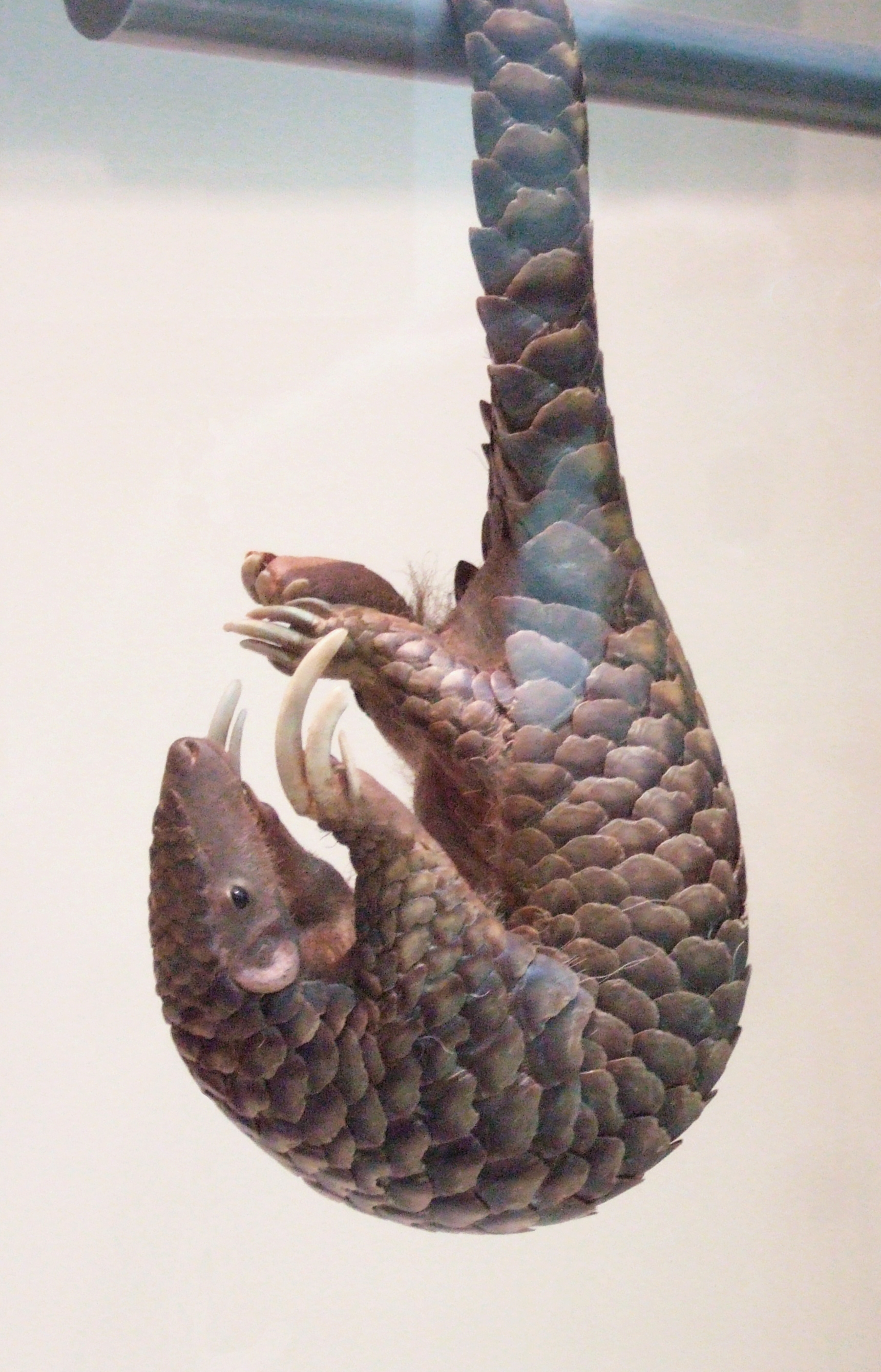
Attempted Pangolin Identification

Finishing up my undergrad education is proving to be more time intensive than I was expecting, partially thanks to tiny fish and giant boots. Rather than posting nothing for the next three weeks, I figured I'll try my hand at (i.e. rip off) a Naish-esque "picture of the day"-type post.


I've had my eye on this preserved pangolin for a couple years now and last week an open lab finally gave me the opportunity to photograph this pholidotan. I didn't realize how much the lighting sucked in the room, but it was sufficient for the purposes of this post. Although occasionally confused for reptiles and formerly allied with xenarthrans (armadillos, anteaters, sloths), molecular evidence strongly supports a Pholidota + Carnivora clade (= Ferae) within Pegasoferae (bats, horses, dogs cats) which is in turn within Laurasiatheria (cows, whales, shrews, hedgehogs) (Nishihara et al. 2006, also citing Madsen et al. 2001, Murphy et al. 2001, Waddell et al. 2001, Amrine-Madsen et al. 2003). Kjer and Honeycutt (2007) used mitochondrial DNA to come up with a different topology featuring Pholidota in the middle of Laurasiatheria, but note that they did not correct for potentially inflated Bayesian posterior probabilities. Fossil evidence suggests that pangolins are a member of the order "Cimolesta" (probably an unnatural group) along with Pantodonta, Taeniodonta, et cetera (Boyer and Georgi 2007). It's a good question as to how all of this fits together, although since I once tried (and failed) to write about it, I'll leave it as is...


There are eight extant species of pangolin which most sources unfortunately lump into the genus Manis. Gaudin and Wible (1999) proposed that the Asian pangolins could be placed in Manis, the arboreal African species in Phataginus, and the terrestrial African species in Smutsia; this was based off of endotympanics and the authors suggested more characters and more extensive analysis before any taxonomic pronouncements were to be made. Botha and Gaudin (2007) note that such a study has not yet been done, but to make classifications easier in this post I'm just going to pretend that the proposed subgenera are actual genera. As David Marjanović will tell you at the Tet Zoo comments, there isn't an established definition for what a "genus" entails, so I figured I'd just call them something useful from a systematic standpoint. That and attempt to be cutting edge.


So anyways, what species is this pangolin? The tail appears to be as long or slightly shorter than the body, thus Phataginus tricuspis and Uromanis tetradactyla can be ruled out immediately. Although this looks like a heavily built animal, the 8.5 by 11 inch paper indicates a head and body length of 13-14 inches (33-36 cm), considerably smaller than Smutsia temminckii (females are 45-47 cm, males 49-55 cm) and the even larger S. gigantea (Heath 1992). Additionally the scales seem too small proportionally to be from a Smutsia and as far as I can tell that genus lacks hairs in between the scales. It's worth mentioning that the scales of pangolin are fused hairs, which makes it all the more remarkable that they can take up 1/4 to 1/3 of the body weight (Heath 1992).


The review of Paramanis culionensis and P. javanica morphology by Gaubert and Antunes (2005) notes that diagnostic characters for these species are 19-21 total scale rows and 15-18 scale rows (respectively); I counted at least 21 for the mount. Even though the authors illustrate the scales from the head and scapular region of the Paramanis species in dorsal view, it is quite clear that they do not resemble the scale shape from the mount at all.


So this just leaves the species which are definitely in the genus Manis, the Indian pangolin M. crassicaudata and the Chinese pangolin M. pentadactyla. I'm going to say that the robust body, thick tail, and scale shape are all suggestive of M. crassicaudata - although I can't be completely certain that this is within the morphological variation of M. pentadactyla. If there is anybody out there familiar with the morphology of these species, please, clue me in!


Alright, back to work.


References:

Botha, Jennifer and Gaudin, Timothy. 2007. An early Pliocene pangolin (Mammalia; Pholidota) from Langebaanweg, South Africa. Journal of Vertebrate Paleontology 27, 484–491

Boyer, Doug M. and Georgi, Justin A. 2 007. Cranial Morphology of a Pantolestid Eutherian Mammal from the Eocene Bridger Formation, Wyoming, USA: Implications for Relationships and Habitat. J Mammal Evol 14, 239–280

Gaubert, Phillipe and Antunes, Agostinho. 2005. Assessing the taxonomic status of the Palawan pangolin Manis culionensis (Pholidota) using discrete morphological characters. Journal of Mammalogy 86, 1068-1074.

Gaudin, Timothy J. and Wible, John R. 1999. The Entotympanic of Pangolins and the Phylogeny of the Pholidota (Mammalia). Journal of Mammalian Evolution 6, 39-65

Heath, Martha, E. 1992. Manis temminckii. Mammalian Species 415, 1-5

Kjer, Karl M. and Honeycutt, Rodney L. 2007. Site specific rates of mitochondrial genomes and the phylogeny of eutheria. BMC Evolutionary Biology 7

Nishihara, Hidenori et al. 2006. Pegasoferae, an unexpected mammalian clade revealed by tracking ancient retroposon insertions. PNAS 103, 9929-9934

Saturday, March 21, 2009

The Ecomorphology of Arctodus

The enormous crown-group bear Arctodus simus is no stranger to this blog, I last covered it a couple years ago, but thanks to a new publication I feel obliged to give it another go. Other motivations include my guilt about letting that prior post get so bloated with topics and my annoyance with the portrayal of this animal in the media… so here we are!

Large and potentially fearsome animals are often subject to “Godzillafication” in popular culture and Arctodus simus is no exception. One of the more egregious offenders in recent memory is the oddly named show Jurassic Fight Club which claims that the bear is 11.5 feet tall (3.5 m), twice as big as extant bears at up to 2500 pounds (1134 kg), and capable of running at 45 miles per hour (72 km/h)! The “size charts” at that site are especially heinous and show a crudely rendered A. simus to have a shoulder height more typical for a proboscidean and its apparent nemesis Panthera atrox to be taller than most rhinoceroses. Illustrations by Mauricio Antón of both animals at a proper scale can be found here.


Size

There is no denying that Arctodus simus was an enormous animal, but claims that it weighed a metric tonne or more are baseless. Christiansen (1999) used limb bone dimensions to calculate that a large male A. simus would weigh between 700 to 800 kg (1540-1760 lbs) and speculated that on rare occasions males could have reached or exceeded one tonne. I think visual comparisons can be highly valuable when dealing with speculative body masses and a mockup of a large A. simus and large polar bears (here) suggest that the estimates made by Christiansen (1999) are indeed rather excessive. Sorkin (2006) questioned the use of limb bone dimension regressions against mass since A. simus has proportionally long and robust legs; estimates based on condylobasal skull length gave a maxima of 570 kg (~1250 lbs) for the species. Since A. simus has a rather short skull I can't help but wonder how accurate condylobasal skull length would be in predicting mass - it should be noted that A. simus also has a short body and this weight estimate does at least look more on the mark visually.

Emslie and Czaplewski (1985) suggested that A. simus, which they though had a maxima of 620-660 kg, may have been beyond the physical limitations of an active predator. I'm not a big fan of using maxima, but since the maximal weights of unambiguous hypercarnivorous predators have been calculated they are actually useful in this situation. Panthera atrox has been given a maxima of 420 kg (925 lbs) based on condylobasal skull length and Smilodon populator "almost certainly exceeded" 400 kg (880 lbs) based on limb bone analysis (Sorkin 2008 - data from Turner and Antón 1997, Christiansen and Harris 2005). Since A. simus did not seem to be greatly in excess of those cats, I don't think active hypercarnivory can be ruled out on that basis.


A Herbivorous Relative

Apomorphies such as a premasseteric fossa and a skull with a short, deep, and convex shape place Arctodus simus in the New World bear subfamily Tremarctinae, which includes the extant spectacled bear Tremarctos ornatus (Trajano and Ferrarezzi 1994). Arctodus and the exclusively South American Arctotherium are united as a clade of "short-faced bears" on the basis of wide molars and presumably other traits (a more foreshortened face?) (Trajano and Ferrarezzi 1994, Soibelzon et al. 2005). Arctodus simus shares its genus with the poorly known A. pristinus, which appears to be distinguished primarily by being smaller in size and appearing slightly earlier in the fossil record (Dalquest and Mooser 1980, Puckette 1976). The Great Bear Almanac claims that other apomorphies of A. pristinus include a "slightly shortened" face, large and high-crowned teeth, and very large canines.

Emslie and Czaplewski (1985) interpret the premasseteric fossa, typically found in large herbivores and small carnivores, as related to an enlarged zygomaticomandibularis muscle which allows for lateral grinding and jaw elevation. A seldom mentioned character is the enlarged radial sesamoid of tremarctine bears, which is apparently a plesiomorphic character shared with giant pandas (Salesa et al. 2006). Its use in Tremarctos ornatus isn't too clear, but it could be related to extensive food manipulation and/or a rather arboreal lifestyle for a bear (Salesa et al. 2006). Emslie and Czaplewski (1985) suggest that the elongated limbs of A. simus could be used to pull down vegetation and I think the retention of an enlarged radial sesamoid could tie in nicely with this hypothesis. Whatever its function, an enlarged radial sesamoid does not sound like a likely characteristic for an alleged cursory animal...

skeleton from Emslie and Czaplewski (1985). Note the less extreme limb proportions and the enlarged radial sesamoid bone.


Lots of Unlikely Characters for a Hypercarnivore

Some early Arctodus simus workers interpreted the bear as having an ecomorphology more similar to a felid than an ursid on the basis of a short and broad rostrum, large carnassial blades, long limbs, and a "possibly" more digitigrade stance (Christiansen 1999 - citing Kurten 1967 and Kurten & Anderson 1980). This hypothesis is the one that got stuck in the popular imagination (wonder why...) and still is despite the fact that Sorkin (2006) utterly demolished it. The sectorial carnassials, position of the mandibular condyle, and development of the angular process which were previously interpreted as evidence for hypercarnivory are all present in Tremarctos, a near-exclusive herbivore (Sorkin 2006). Buccal cusps on the upper molars of A. simus are shared with the largely herbivorous Kodiak bear (Ursus arctos middendorfi) (Sorkin 2006). Additionally, Sorkin (2006) noted that relatively short canines, small orbits directed somewhat laterally, reduced leverage of deltoid and pectoralis muscles (used to subdue prey), reduced development of the brachialis and brachioradialis muscles (used to grasp prey), reduced pronation of the forearm and the flexation of the wrist and digits (used to grasp prey), a short and bent olecranon process (reduction of ability to crouch), brown bear-like lumbar vertebrae with limited flexion in the sagittal plane (meaning slower acceleration and top speed) all indicate that A. simus was not an active predator.

Matheus (1995) suggested that carbon and nitrogen isotope evidence indicated that A. simus was highly carnivorous, but functioned primarily as a scavenger adapted for long distance walking/predator intimidation. The only known vertebrate obligate scavengers are large soaring fliers and while a large terrestrial scavenger is not energetically infeasible per se, the hypothetical niche could only have evolved in an environment without vultures (Ruxton and Houston 2004). Furthermore, the isotope range overlaps with Pleistocene brown bears (Ursus arctos) and it does not appear that a hypercarnivore and omnivore with a diet including terrestrial mammals can be distinguished from isotopes (Sorkin 2006).


Warp Analysis

One of the aforementioned inspirations for this post was another recent re-evaluation of A. simus morphology by Figueirido et al. (2009), which I can't believe I'm just getting around to now. Modern faunivorous bears, the insectivorous sloth bear Melursus ursinus and the carnivorous polar bear Ursus maritimus, have long and flat skulls with frontalized orbits, downwards directed zygomatic arches, a slender jaw with small movement arms for the temporalis and masseter muscles and poorly developed upper and lower tooth rows (Figueirido et al. 2009). The vastly different prey of the two bears and their apparent convergences would seem to suggest that if A. simus were hypercarnivorous, it would at least display some of these characters. Herbivorous bears, the spectacled bear and the giant panda, have a short jaw with large movement arms for the temporalis and masseter, a horizontal ramus deep at the level at the level of the third molar and shallow below the canines, well-developed cheek teeth, small canines, well-developed zygomatic arches, and lateralized orbits (Figueirido et al. 2009). Even though those are the two most basal bear species, the fossil record appears to indicate that they developed these traits independently rather than retained them (Figueirido et al. 2009). Arctodus simus does not group with either of these ecomorphs, but falls in the middle with generalized omnivorous ursid species (Figueirido et al. 2009). Sorkin (2006) reached a similar conclusion and thought the bear could be compared with the striped and brown hyenas (Hyena hyena and Hyena brunnea) and may have had a diet consisting of large animal carrion, small animal prey, and plant material. Figueirido et al. (2009) suggest an even more thorough ecomorphological study including other carnivorans should be done with A. simus, but conclude that it was likely an omnivore capable of dealing with with seasons and climactic cycles. Of course, even animals with a highly plastic diet aren't immune to extinction.


So that's about all I want to say about Arctodus simus - I have no idea why this post took to write as long as it did. There is little doubt that some less-enlightened members of the media will continue to erroneously portray this animal as a hypercarnivorous terror, but hopefully the alternate (and more parsimonious) suggestions will gain some attention.


References:

Carbone, Chris et al. 2007. The Costs of Carnivory. PLoS Biology. Available

Christiansen, Per and Harris, John M. 2005. Body size of Smilodon (Mammalia: Felidae). Journal of Morphology 266, 369-384

Christiansen, Per. 1999. What size were Arctodus simus and Ursus spelaeus (Carnivora; Ursidae)? Ann. Zool. Fennici 36, 93-102. Available

Dalquest, Walter W. and Mooser, O. 1980. Arctodus pristinus Leidy in the Pleistocene of Aguascalientes, Mexico. Journal of Mammalogy 61, 724-725.

Emslie, Steven D. and Czaplewski, Nicholas J. 1985. A new record of the giant short-faced bear, Arctodus simus, from western north America with a reevaluation of its paleobiology. Natural history museum of Los Angeles county contributions in science 371, 1-12.

Figueirido, B. et al. 2009. Ecomorphological correlates of craniodental variation in bears and paleobiological implications for extinct taxa: an approach based on geometric morphometrics. Journal of Zoology 277, 70-80.

Matheus, Paul E. Diet and Co-Ecology of Pleistocene Short-Faced Bears and Brown Bears in
Eastern Beringia. Quaternary Research 44, 447-453

Puckette, William L. 1976. Notes on the Occurrence of the short-face bear (Arctodus) in Oklahoma. Proc. Okla. Acad. Sci. 56, 67-68

Ruxton, Graeme D. and Houston, David C. 2004. Obligate vertebrate scavengers must be large soaring fliers. Journal of Theoretical Biology 228, 431-436

Salesa, M. J. et al. 2006. Anatomy of the “false thumb” of Tremarctos ornatus (Carnivora, Ursidae, Tremarctinae): phylogenetic and functional implications. Estudios Geológicos 62, 389-394

Soibelzon, Leopoldo, H. et al. 2005. The fossil record of South American short-faced bears (Ursidae, Tremarctinae). Journal of South American Earth Sciences 20, 105-113.

Sorkin, Boris. 2008. A biomechanical constraint on body mass in terrestrial mammalian
predators. Lethaia 41, 333–347

Sorkin, Boris. 2006. Ecomorphology of the giant short-faced bears Agriotherium and Arctodus. Historical Biology 18, 1-20

Trajano, E. and Ferrarezzi, H. 1994. A fossil bear from Northeastern Brazil, with a phylogenetic analysis of the South American extinct Tremarctinae (Ursidae) Journal of Vertebrate Paleontology 14, 552-556

Wednesday, March 4, 2009

Giant Leptocephali

Elopomorpha is a diverse group of basal teleost orders united by a leaf-like larval form known as a leptocephalus; members include the tarpons and relatives (Elopiformes), bonefish (Albuliformes), halosaurs and spiny eels* (Notacanthiformes), true eels (Anguilliformes), and the gulper eels and relatives (Saccopharyngiformes) (Inoue et al. 2004). Inoue et al. (2004) finally corroborated the monophyly of Elopomorpha with character matrices and determined this phylogeny:

*Halosaurs and spiny eels have been placed in o
rder Albuliformes by Inoue et al. (2004).


Fig. 5 from Inoue et al. (2004). Elops and Megalops are Elopiformes, Albula and Pterothrissus are members of Albulidae (bonefish), Aldrovandia and Notacanthus are members of Halosauridae and Notocanthidae, Gymnothorax through Anguilla are Anguilliformes, Saccopharynx and Eurpharynx are Saccopharyngiformes. Note that Albulidae and Anguilliformes are paraphyletic according to this phylogeny. The leptocephalus tail shape is important later on in this post.


Leptocephali are not normally very large, typically some 2-4 inches (50-100 mm) in length, so specimens substantially larger than this certainly raise eyebrows. The most commonly mentioned giant leptocephali were those collected by the Dana, the largest of which measured around 1800 mm (Castle 1959, citing Bertin 1954). Unfortunately, I have not found any information on these specimens aside from the length of the one individual and the number of myomeres (450*); their current whereabouts appear to be unknown. The ambiguity of this report has not stopped some cryptozoologists (e.g. Heuvelmans) from assuming that the larvae were true eels** with Anguilla-like growth (45 mm leptocephalus to a 800 mm adult) and a ~30 m adult size! Castle (1959) pointed out that Nemichthys scolopaceus has a larvae up to 253 mm in length and a growth rate which would turn a 1.8 m larvae into a 2.7-5.4 m adult. As we'll see, it's not entirely out of the question for the 1.8 m larvae to have an adult length shorter than that of the larvae.

*The number of myomeres apparently led Bertin to think that the larvae were members of Nemichthys (Castle 1959).

** Castle (1959) seems to synonymize "leptocephalid" with "eel larvae", so apparently he was unaware of the larval stage occuring in several other orders. Elopomorpha was established in 1966 on the basis of leptocephalus larvae (Inoue et al. 2004), and it seems improbable that four leptocephalus-adult relationships were worked out in 7 years. Heuvelmans, writing in 1968, certainly should have known.


Leptocephalus giganteus was first described by Castle (1959) on the basis of a 893 mm leptocephalus caught in shallow water off South Westland, New Zealand. The larvae was extremely attenuated with an 18.1 mm head, pre-vent length of 883 mm, depth of 18 mm, and 466-486 myomeres (Castle 1959). Castle (1959) suggests that characteristics such as the lack of fin rays, lack of cranial and pectoral development, V-shaped myomeres, and a subterminal vent indicate that this larvae is not a pathological giant and has not yet reached its full growth. He concluded that there's a giant bathypelagic eel living off the coast of New Zealand...

Another L. giganteus from S. Africa was described in 1967 and two more were reportedly found in an Alepisaurus* stomach, but it wasn't until Smith (1970) that an incredibly important feature was recognized. True eels never have pelvic fins at any of their life stages and sure enough, Smith (1970) noticed barely visible pelvic fins at the 34th myomere of his large individual. Coupled with the short-based dorsal fin, L. giganteus was recognized as a notacanthiform (Smith 1970). Interestingly, this excerpt from Early Stages of Fishes in the Western North Atlantic puts the maximum length of L. giganteus at 1840 mm (or 2 m), awfully close to the reported length of the largest 1930 Dana specimen. Are there reasons for thinking that the Dana specimens are L. giganteus aside from the length and myomere count (300-486 in L. giganteus, 450 in Dana)? Even more curiously, the book cites a source which suggests that L. giganteus may be a synonym for Notacanthus chemnitzi; are size and a widespread distribution the reasons for thinking this? I found a Moser and Charter (1996), but it did not have any unique information on L. giganteus...

*What's with all these fish having a suffix that means "lizard"?


Giant leptocephali appear to have been known since 1810 (from Rafinesque) and these unusual elongated larvae were eventually placed in the "genera"/categories Tilurus and "Tiluropsis"* by Roule (Smith 1970). While L. giganteus has an elongated head and round eyes, Tilurus can be distinguished by its short head and round eyes and "Tiluropsis" has a short head with vertically elongated eyes (Smith 1970). "Tiluropsis"-type larvae were recently captured in Brazilian waters, giving the authors an opportunity to discuss how prior workers tenuously connected the larvae to the halosaur Aldrovandia gracilis; the two have similar branchiostegal and pectoral ray counts and overlapping distributions, but the authors feel that much work is needed to clear up the life cycle of the enigmatic larvae. The book excerpt suggests that Tilurus belongs to the other notacanthiform subgroup, Notacanthidae.

* Tilurus has nomenclatural standing and "Tiluropsis" doesn't - somehow. Another type, "Tilurella" turned out to be a post-larval Nemichthys - it was distinguished by having elongated dorsal and anal fins, an anguilliform nasal organ, et cetera (Smith 1970).


With the advent of molecular data, if someone manages to get hold of giant leptocephalus and notacanthiform tissues they could theoretically resolve the mysteries surrounding the larvae. Do the larvae shrink in size at transformation? How many species compose each of the leptocephalus types? Do all notacanthiform larvae have this elongated shape? Although I'm somewhat doubtful that any of these will turn out to be a 30 m eel, it should still be a fascinating study nonetheless...


Reference:

Castle, P. H. J. 1959. A Large Leptocephalid (Teleosti, Apodes) from off South Westland, New Zealand. Transactions of the Royal Society Society of New Zealand 87, 179-184. Available

Figueroa, Daniel E. et al. 2007. The southernmost record of notacanthiform Tiluropsis leptocephali, with notes on possible species identity. JMBA2 - Biodiversity Records. Available

Inoue, Jun G. et al. 2004. Mitogenomic evidence for the monophyly of elopomorph fishes (Teleostei) and the evolutionary origin of the leptocephalus larvae. Molecular Phylogenetics and Evolution 32, 274-286.

Smith, David G. 1970. Notacanthiform Leptocephali in the Western North Atlantic. Copeia 1970, 1-9.

Tuesday, February 10, 2009

Fossil Octopods Part 2: Pre-K/T

The first post of this series looked at fossil cephalopods whose inclusion in the order Octopoda (= Octobrachia) is a matter of debate. Pohlsepia mazonensis is an early Carboniferous coleoid with 10 appendages (including 2 tentacles!) which was interpreted as an octopod because of its sac-like body and lack of an apparent shell; the presence of fins indicates that it must have had some internal support and it is currently ignored in phylogenetic analyses because of its dubious preservation. Proteroctopus ribeti was a mid-Jurassic coleoid with 8 limbs, but it also curiously lacked a gladius despite having fins; it could be a stem-octopod, but affiliations with vampyromorphs are just as probable with the available evidence. Trachyteuthids are a mid-Jurassic to late Cretaceous family currently thought to be vampyromorphs (previously squids) but their beak and gladius morphology implies that the squid-like coleoids with eight cirrated appendages and four fins are in fact stem-octopods. Hopefully healthy debate in the future will solidify the phylogenetic positions of these organisms, but there are fossils with undoubted affinities to Octopoda.


Octopods

Palaeoctopus

First described in 1896 from Lebanon, the gladius vestiges of these Cretaceous cephalopods unambiguously indicate that they are octopods (Fuchs et al. 2008). Preservation of soft tissue shows that Palaeoctopus had fins; interestingly the gladius remnants do not resemble the clasp or butterfly-shaped structures of the finned cirrates, but the paired remnants of incirrates (Fuchs et al. 2008). The gladius remnants of Palaeoctopus differ from modern incirrates in being proportionally large, close-set, and stiffened - likely adaptations for providing muscle attachment for the fins (Fuchs et al. 2008). Fuchs et al. (2008) suggest that similarities in curvature in the lateral field of the gladius remnants/gladius of Palaeoctopus and teudopseids further demonstrates their theory about the derivation of the former from the latter... but keep reading.

P. newboldi was the only known species of Palaeoctopus for well over a hundred years, but recently Fuchs et al. (2008) described another species, P. pelagicus, from the early Turonian (~93 mya) of Mexico which differs from P. newboldi in the form and structure of the reinforcements and fields of their gladius remnants. The soft body morphology of P. newboldi indicates that it was probably capable of some benthic locomotion; this data is lacking for the earlier P. pelagicus, but the low oxygen of the sea floor and the distance from coasts strongly suggests that this species was entirely pelagic (hence the name) (Fuchs et al. 2008). I can't help but wonder if Palaeoctopus is paraphyletic or polyphyletic, considering the millions of years between the species and the possible lifestyle differences.


Palaeoctopus newboldi holotype. The soft body morphology of P. pelagicus is unknown, but likely to show more evidence of a pelagic lifestyle.


Keuppia

Palaeoctopus pelagicus was briefly the oldest unambiguous incirrate octopod until Fuchs et al. (2009) described five specimens from two genera and three species from the slightly older Upper Cenomanian (~95 mya). Keuppia was placed in the same family as Palaeoctopus, Palaeoctopodidae, on the basis of sharing blade-like medially isolated bipartite gladius vestiges (Fuchs et al. 2009). Unlike Palaeoctopus, the Keuppia species have a gladius vestige complex with a sub-triangular/semi-circular shape and linear growth patterns instead of concentric (Fuchs et al. 2009). The shape of their gladii remnants are more reminiscent of loligosepiid Octopodiformes, leading the authors to greatly revise their "teudopseid pathway" phylogeny proposed in earlier articles (Fuchs et al. 2009). Curiously, none of the three Keuppia specimens showed preserved fins (they did show suckers, ink sacs, gill lamellae, etc) - however circular encrustations imply that they had basal fin cartilage and were powerful swimmers (Fuchs et al. 2009). Palaeoctopus did not have preserved basal fin cartilage but it did have fins, Fuchs et al. (2009) suggest that it was a less powerful swimmer than Keuppia. I'd like to suggest the possibility that Keuppia recently lost its fins and still possessed a swimmer-like gladius - but I'm not the palaeontologist here. When more fossils turn up, it seems likely that they'll possess some bewildering array of characteristics that leads to more phylogenetic upheaval. The concept of morphological plasticity in early evolutionary "stages" is beginning to sound more plausible to me...


Styletoctopus

Another undoubted incirrate octopod from the Upper Cenomanian of Lebanon, incredibly this species already possesses stylets and appears to be a member of the extant family Octopodidae (Fuchs et al. 2009). Stylets (or rods) are gladius vestiges even more reduced and separated than those of the Palaeoctopodidae*; Fuchs et al. (2009) state that the stylets of Styletoctopus resemble those of Enteroctopus, Benthoctopus and Eledone in the possession of anterior and posterior "shoulders"**. Despite its otherwise modern morphology, Styletoctopus has circular structures which may be interpreted as small globular fins - rather unexpected for a cephalopod with such a reduced gladius (Fuchs et al. 2009). If fins were present (and that's a big "if"), it would seem to indicate that fins were lost multiple times within the incirrate octopods. Styletoctopus implies that Octopoda first derived at least in the Early Cretaceous and possibly the Jurassic (Fuchs et al. 2009).

* Interestingly, Keuppia has posterior shell sacs (remnants) while Palaeoctopus had more laterally placed ones transitional in placement between Keuppia and Styletoctopus; Fuchs et al. (2009) suggest there is some sort of functional difference associated with these placements.

** Strugnell et al. (2005) found Benthoctopus and Enteroctopus to form a clade despite being classified in different subfamilies. Strugnell and Nishiguchi (2007) noted that some previous authors considered Eledone basal - unfortunately Benthoctopus and Enteroctopus were not included in the analysis but Eledone tended to group with other octopods with one row of suckers.


Campanian Cirrate?

Fuchs et al. (2009) mentions a publication which described an unpaired saddle-shaped shell vestige possibly belonging to a cirrate Octopod. I cannot find this:

Fuchs, Dirk et al. 2007. Coleoid cephalopods from the Late Cretaceous North eastern Pacific. 131. In 7th International Symposium ‘Cephalopods – Present & Past’, abstract volume. Sapporo.


"Octopodida" (= Octopoda) Incertae sedis

Tanabe et al. (2008) describe a medium-sized lower jaw from the Santonian which shows the characteristic posteriorly expanded wings and ventrally projected inner lamella with a narrowly rounded crest typical of Octopoda - however it was not well preserved enough to determine any further relations.


Paleocirroteuthis

Two species, P. pacifica and P. haggarti, have lower jaws with a similar shape to modern cirrates, albeit with a posteriorly expanded lateral wall and greater size (Tanabe et al. 2008). P. haggarti has been found in the Santonian and Lower Campanian of Vancouver Island while P. pacifica is known from the Lower Campanian of Hokkaido and Vancouver Island, they are similar in size and morphology although the P. pacifica specimens were not as well-preserved (Tanabe et al. 2008). Since the authors also found a similarly sized vampyromorph from the Lower Campanian of Vancouver, Nanaimoteuthis jeletzkyi, they used a negative allometric equation scaled up from modern Vampyroteuthis to estimate that all of these species ranged between 11-57 kg (24-126 lbs) in weight and 24-37 cm (9.5" - 14.5") in mantle length. A Cirroteuthis magna with a 33 cm mantle length (13") and total length of 1.7 m (5'7") has been reported - but unfortunately not weighed (Collins et al. 2001). Judging from the photo, it probably weighed less than 10 kg - but then again, I'm not a teuthologist.


That's about it for interesting fossil octopods, no offense to the Argonauts. Considering how much this topic can change in a couple years I might as well start preparing for the re-reboot... if I didn't have a lot of other things to do.


References:

Collins, Martin A. et al. 2001. A large Cirroteuthis magna (Cephalopoda: Cirroctopoda) caught on the Cape Verde Terrace (North Atlantic). J. Mar. Biol. Ass. UK. 81, 357-358.

Fuchs, Dirk and Schultze, Hans-Peter. 2008. Trachyteuthis covacevichi n. sp., a Late Jurassic Palaeopacific coleoid cephalopod. Fossil Record 11, 39-49.

Fuchs, Dirk et al. 2008. A new Palaeoctopus (Cephalopoda: Coleoida) from the Late Cretaceous of Vallecillo, North-Eastern Mexico, and implications for the evolution of Octopoda. Palaeontology 51, 1129-1139.

Fuchs, Dirk et al. 2009. New Octopods (Cephalopoda: Coleoida) from the Late Cretaceous (Upper Cenomanian) of Hakel and Hadjoula, Lebanon. Palaeontology 52, 65-81.

Kluessendorf, Joanne and Doyle, Peter. 2000. Pohlsepia mazonensis, and early 'Octopus' from the Carboniferous of Illinois, USA. Palaeontology 43, 919-926.

Klug, Christian et al. 2005. Coleoid beaks from the Nusplingen Lithographic Limestone (Upper Kimmeridgian, SW Germany). Lethaia 38, 173–192

Strugnell, Jan and Nishiguchi, Michelle K. 2007. Molecular phylogeny of coleoid cephalopods (Mollusca: Cephalopoda) inferred from three mitochondrial and six nuclear loci: a comparison of alignment, implied alignment and analysis methods. Journal of Molluscan Studies 73, 399-410.

Strugnell, Jan et al. 2005. Molecular phylogeny of coleoid cephalopods (Mollusca: Cephalopoda) using a multigene approach; the effect of data partitioning on resolving phylogenies in a Bayesian framework. Molecular Phylogenetics and Evolution 37, 426-441.

Tanabe, Kazushige, et al. 2008. Late Cretaceous Octobrachiate Coleoid lower jaws from the North Pacific regions. J. Paleont. 82, 398-408.

Monday, February 9, 2009

Fossil Octopods Part 1: Possible Octopods

If this topic looks familiar, that's because it was covered back in 2007. Since those dark ages, much more information has become available and I realized a reboot was in order. Looking back at that old page was like watching Batman & Robin after Batman Begins.

So what is an "octopod"? For this post, I will consider an "octopod" to be everything more closely related to Octopus than Vampyroteuthis; this includes the cirrate and incirrate octopuses in Octopoda plus whatever stem-octopods are out there. Unfortunately, there is little consistency in the naming of major cephalopod taxonomic rankings in some recent literature. Mikko's phylogeny calls the order "Octopoida", but still refers to the animals as "octopods" instead of "octopoids". Fuchs et al. (2008) calls the order Octobrachia, the suborder containing incirrates Octopoda, and the suborder containing cirrates Cirroctopoda. The systematics used by Tanabe et al. (2008) have a superorder Octobrachia containing the orders Cirroctopodida, Octopodida, and Vampyromorphida. Young and Vecchione (2008) argue that cirrates and incirrates are well-supported sister taxa and this reorganization is not valid. So I'll stick with the more traditional naming scheme, but we'll see how this holds up with the re-reboot in a couple years.


Possible Octopods

Early cephalopod evolution was apparently rife with "morphological plasticity"; Carboniferous coleoid shells exhibited character recombinations not observed in Mesozoic individuals and previously thought to be impossible (Doguzhaeva et al. 2007). Assuming that this phenomenon effected parts of the cephalopod aside from the shell, caution should be used when assigning very early coleoids to groups.


Pohlsepia mazonensis

An upper Carboniferous fossil from the Mazon Creek Lagerstätte of Illinois, this "exceptionally well preserved" fossil in ventral view is interpreted to have a sub-circular and dorso-ventrally flattened sac-like body; two narrow posterior fins with a narrow, symmetric shape; a head indistinct from the body with mandibular architecture, eyes, and a funnel; an arm crown which is indistinct with no hooks or suckers visible, there appear to be short arms and long modified arms (tentacles) (Kluessendorf and Doyle 2000).


Stolen from Wikipedia. Abbreviations: e, eye; ef, expressed fluid; f, fin; fu, funnel; is?, ink sac (or gut trace); m, mandibles; ma, modified arm (tentacle); r, radula.


Kluessendorf and Doyle (2000) modify another author's figure to show Pohlsepia on the stem-line leading to the Vampyromorpha/Octopoda clade (text-fig 2); bizarrely they regard it as a possible member of Cirrata (= Cirroctopoda) - a group which the figure shows deriving more than a couple hundred million years after Pohlsepia. Since Pohlsepia reportedly lacks a shell, the authors compare it to octopods (cirrates and incirrates) which "lack any form of shell" - this is not true as shells are present in cirrates in the form of cartilaginous fin supports and in some incirrates as stylets. The presence of fins indicates that a shell-like structure must be present as a site of muscle attachment, so clearly either this fossil was not interpreted correctly or not everything fossilized. Klug et al. (2005) call this a poorly preserved fossil and suggest that the structures interpreted as fins could very well be the remnants of an internal shell. Considering the eight arms, two tentacles, dorso-ventral compression and possible shell remnant, could this be a decapodiform that was deformed (squished) during fossilization? Additional specimens will be needed to clear up all of these ambiguities since right now the absence of hard parts is viewed as a diagenetic artifact and Pohlsepia is ignored in phylogenetic analyses (Fuchs et al. 2008).


Proteroctopus ribeti

Very little literature on this species is available to me, but it is fortunately discussed by Fuchs et al. (2008). This mid-Jurassic coleoid has been viewed as an incirrate octopod by some, but its lack of a gladius us probably due to the deposit it was found in (where no gladii have preserved) (Fuchs et al. 2008). The presence of a pair of fins strongly supports the notion that the gladius failed to preserve. It is possible that the lack of cirri on the fossil is also an artifact of preservation (Fuchs et al. 2008). This article notes that the species has a sac-like body, two fins, eight equal arms and no indication of a modified appendage pair - but is it a stem-octopod? Fuchs et al. (2008) suggest that it could be a stem-line member of either "Octobrachia" (=Octopoda) or Vampyromorpha, since it has a vampyromorph-like body outline.


Proteroctopus ribeti, stem-octopod or stem-vampyromorph? Compare with Vampyronassa rhodanica, a contemporary vampyromorph and possible relative.


Teudopseina

I mentioned the peculiar coleoid Trachyteuthis hastiformis in a previous post - although not the one on fossil octopods. Although trachyteuthids have been assigned to a number of groups, the presence of two pairs of fins, eight arms, cirri, arm webbing, and the absence of a phragmocone has led to classification as a vampyromorph (Fuchs and Schultze 2008). However, the beak morphology bears a stronger resemblance to Octopus than Vampyroteuthis (Klug et al. 2005). Klug et al. (2005) note that beak morphology is not the most important character in coleoid phylogeny and suggest that more beaks from vampyromorphs will be needed to determine if other members of the group could exhibit Octopus-like beak morphology. Interestingly, Fuchs and Schultze (2008) place Trachyteuthis in the order Octobrachia (= Octopoda) and the suborder Teudopseina; they cited obscure sources which claimed that the gladius remnants of cirrate and incirrates derived from a teudopseid gladius. If this classification is correct (and it will certainly be debated in the future, then Trachyteuthis, Teudopsis, Glyphiteuthis and relatives are stem-octopods.


From Klug et al. (2005). This reconstruction presumes a close relation with Vampyroteuthis, although if Trachyteuthis is an octopod I doubt it looked much different. This looks a lot better than my effort.


Loligosepiidae

A group I forgot to add when I originally published this post, loligosepiids are another family of coleoids currently classified as vampyromorphs which may have octopod affinities. I unfortunately can't access this paper to give more of a background, but newly described octopod species hint that they may be derived from this family and not Teudopsidae (Fuchs et al. 2009). It is possible that loligosepiids are members of both the Octopoda and Vampyromorpha stem groups (Fuchs et al. 2009).


That's it for now, part 2 tomorrow will cover fossils that are without a doubt actual octopods.


References:

Doguzhaeva, Larisa et al. 2007. A Late Carboniferous Coleoid Cephalopod from the Mazon Creek Lagerstätte (USA), with a Radula, Arm Hooks, Mantle Tissues, and Ink. IN: N. H. Landman et al. (eds.) , Cephalopods Past and Present: New Insights and Fresh Perspectives, 121-143

Fuchs, Dirk et al. 2009. New Octopods (Cephalopoda: Coleoida) from the Late Cretaceous (Upper Cenomanian) of Hakel and Hadjoula, Lebanon. Palaeontology 52, 65-81.

Fuchs, Dirk et al. 2008. A new Palaeoctopus (Cephalopoda: Coleoida) from the Late Cretaceous of Vallecillo, North-Eastern Mexico, and implications for the evolution of Octopoda. Palaeontology 51, 1129-1139.

Kluessendorf, Joanne and Doyle, Peter. 2000. Pohlsepia mazonensis, and early 'Octopus' from the Carboniferous of Illinois, USA. Palaeontology 43, 919-926.

Tanabe, Kazushige, et al. 2008. Late Cretaceous Octobrachiate Coleoid lower jaws from the North Pacific regions. J. Paleont. 82, 398-408.

Young, Richard E. and Michael Vecchione. 2008. Octopodiformes Berthold and Engeser, 1987. Vampire Squid and Octopods. Version 21 April 2008 (under construction). http://tolweb.org/Octopodiformes/19405/2008.04.21 in The Tree of Life Web Project, http://tolweb.org/